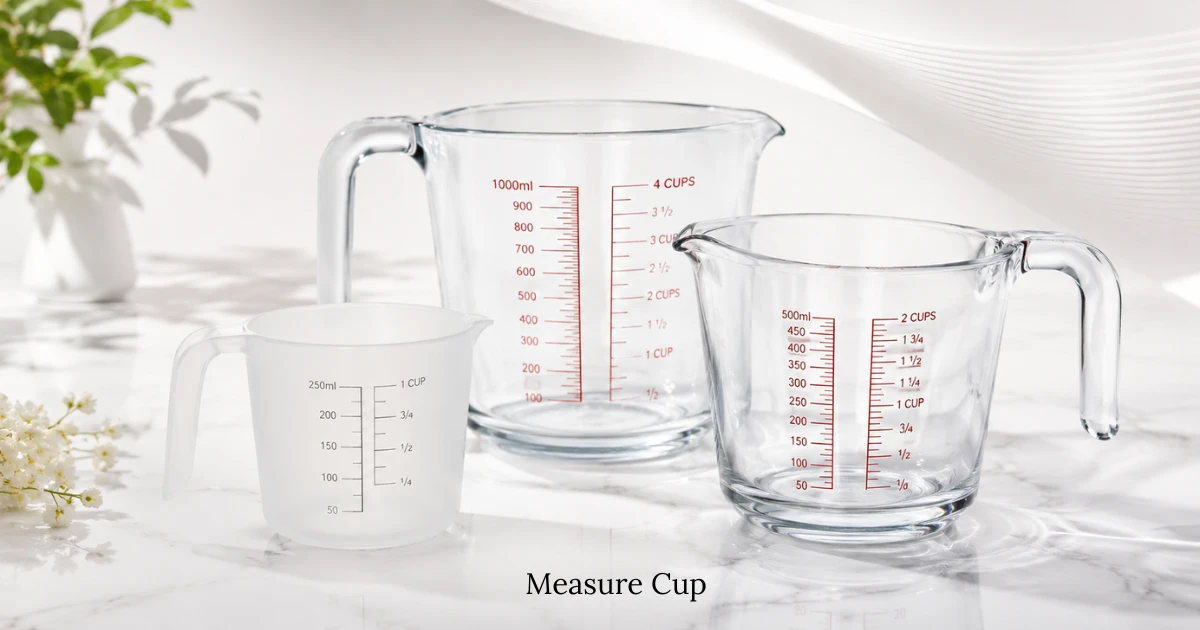
What Is a Measure Cup?
A measure cup is a standard kitchen tool used to measure both liquid and dry ingredients by volume. It takes the guesswork out of cooking and baking completely.
Every accurate recipe depends on one thing — consistent measurement. A proper measuring cup delivers exactly that, every single time.
Types of Measuring Cups
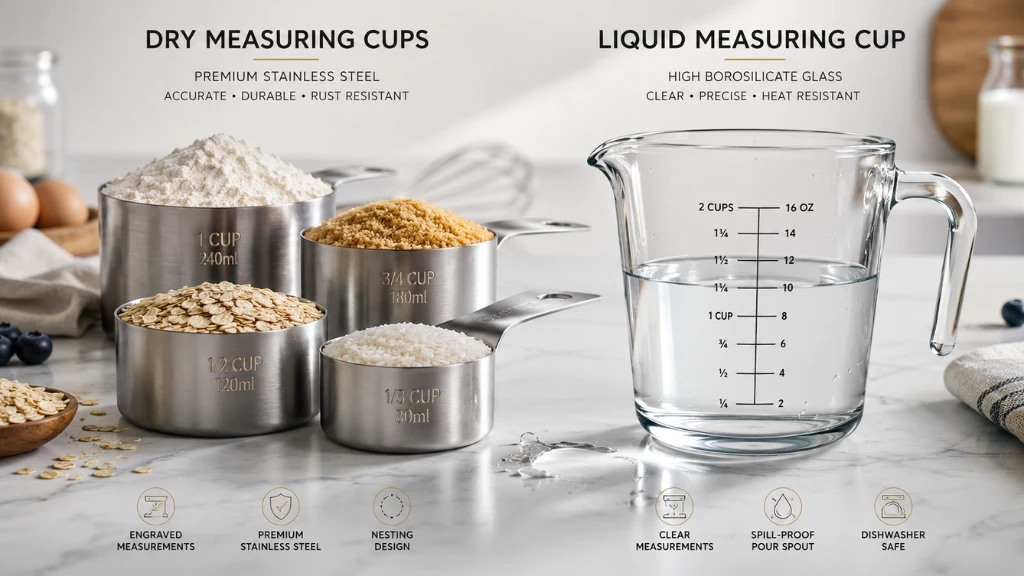
Dry Measuring Cups
Dry measuring cups are designed for solid ingredients like flour, sugar, oats, rice, and spices. You fill them to the top and level off the excess with a flat edge.
Using a dry cup correctly means your baked goods rise properly and taste exactly as intended.
Liquid Measuring Cups
Liquid measuring cups are made from clear glass or plastic with measurement markings on the side. They have extra headspace above the top line so liquids don’t spill.
Always read the measurement at eye level for the most accurate result.
Standard Measure Cup Sizes
| Measure Cup | Tablespoons | Teaspoons | Milliliters | Fluid Ounces |
|---|---|---|---|---|
| 1 cup | 16 tbsp | 48 tsp | 240 ml | 8 fl oz |
| ¾ cup | 12 tbsp | 36 tsp | 180 ml | 6 fl oz |
| ½ cup | 8 tbsp | 24 tsp | 120 ml | 4 fl oz |
| ¼ cup | 4 tbsp | 12 tsp | 60 ml | 2 fl oz |
1 cup = 8 fluid ounces = 240 ml = 16 tablespoons. This is the universal standard used across the United States in recipes, cookbooks, and nutrition labels.
Measure Cup Conversion Chart
| From | To | Value |
|---|---|---|
| 1 cup | Milliliters | 240 ml |
| 1 cup | Grams (water) | 240 g |
| 1 cup | Fluid Ounces | 8 fl oz |
| 1 cup | Pint | ½ pt |
| 1 cup | Quart | ¼ qt |
| 2 cups | Pint | 1 pt |
| 4 cups | Quart | 1 qt |
How to Use a Measure Cup Correctly
Most people own measuring cups. Very few use them correctly. These small habits make a big difference.
Measuring Dry Ingredients
Never scoop flour directly from the bag. This packs it tightly and adds up to 20% more flour than the recipe requires.
Instead, spoon the flour into the dry measuring cup. Then level the top with the back of a butter knife. Clean, flat, accurate.
Measuring Liquid Ingredients
Set the liquid measuring cup on a flat countertop. Pour in your liquid. Then bend down to read the marking at eye level — not from above.
Reading from above creates a visual angle error called the parallax effect, which leads to inaccurate pours.
Measuring Sticky Ingredients
For honey, maple syrup, peanut butter, or molasses — lightly coat the inside of the cup with a thin layer of cooking spray or oil first.
Dry vs Liquid Measure Cup
Dry measuring cups are meant to be filled to the brim and leveled. Liquid measuring cups have markings below the rim to allow safe pouring without overflow.
Using a liquid cup for flour gives you less than needed. Using a dry cup for water means you are eyeballing the top — which is never precise. Always use the right cup for the right ingredient.
Measure Cup Materials Compared
Plastic Measuring Cups
Lightweight and affordable. Available in multiple colors, which makes identifying sizes easy and fast. Best for everyday home cooking and baking.
However, plastic can warp over time with heat exposure, which may affect measurement accuracy.
Stainless Steel Measuring Cups
Stainless steel cups are rust-resistant, durable, and long-lasting. They do not stain, absorb odors, or bend easily.
They are the top choice for serious home bakers and professional kitchen use.
Glass Measuring Cups
Glass cups are microwave-safe, heat-resistant, and easy to read. They are primarily used for liquids because of their clear markings and stable base.
Pyrex glass measuring cups are among the most trusted brands in US kitchens.
Measure Cup Sizes for Baking vs Cooking
In baking, measurements must be precise. Baking is a science. Too much flour makes bread dense. Too little sugar makes a cake flat.
In everyday cooking, slight variations are acceptable. A little more broth or a little less oil rarely ruins a dish.
What 1 Cup Equals in Common Ingredients
1 cup does not weigh the same for every ingredient. Volume stays the same, but weight changes based on density.
| Ingredient | 1 Cup in Grams |
|---|---|
| All-purpose flour | 120 g |
| Granulated sugar | 200 g |
| Powdered sugar | 120 g |
| Butter | 227 g |
| Raw rice | 200 g |
| Rolled oats | 90 g |
| Honey | 340 g |
| Water / Milk | 240 g |
FAQ’s
How do you measure 1 cup?
Fill a dry measuring cup level to the top for solids, or fill a liquid cup to the 1-cup line and read at eye level for fluids.
What is the measurement of a cup?
One standard US cup equals 8 fluid ounces, 16 tablespoons, 48 teaspoons, or 240 milliliters.
Is 1 cup 250ml or 200ml?
In the USA, 1 standard cup equals 240ml — not 250ml or 200ml.
Is a teacup 200ml?
A standard teacup holds roughly 150–200ml, which is smaller than a US measuring cup at 240ml.
What is 1 cup in grams?
It depends on the ingredient — 1 cup of flour is about 120g, while 1 cup of sugar is around 200g, and 1 cup of water equals 240g.
What is a cup size?
Cup size refers to the volume capacity of the measuring cup — standard sizes in a set are ¼ cup, ⅓ cup, ½ cup, and 1 full cup.