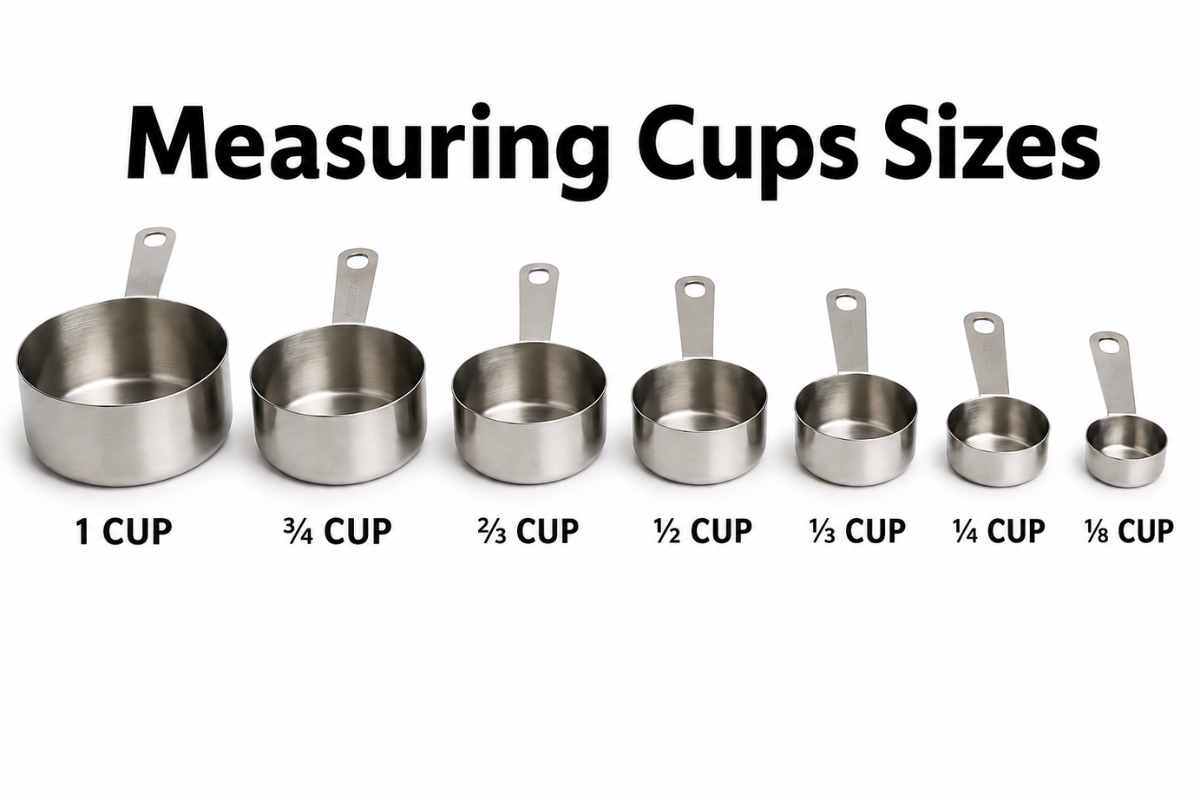
Measuring cups sizes trip up even experienced cooks, especially when a recipe calls for ¾ cup or ⅔ cup and your set skips them. This guide gives you the exact conversions, chart, and easy workarounds for every size. No guesswork, no wasted ingredients, just accurate measuring every time.
What Are Standard Measuring Cups Sizes
Standard measuring cups sizes in the US kitchen are 1 cup, ¾ cup, ⅔ cup, ½ cup, ⅓ cup, ¼ cup, and ⅛ cup. Most basic sets only include four sizes: 1 cup, ½ cup, ⅓ cup, and ¼ cup.
That means ¾ cup, ⅔ cup, and ⅛ cup are often missing, even though recipes call for them often. Knowing the right measuring cups sizes and how to combine them saves time and keeps your cooking accurate.
Measuring Cups Sizes Chart
| Cups | Tablespoons | Teaspoons | Fluid Ounces | Milliliters |
|---|---|---|---|---|
| 1 cup | 16 tablespoons | 48 teaspoons | 8 fl oz | 240 ml |
| ¾ cup | 12 tablespoons | — | 6 fl oz | 177 ml |
| ⅔ cup | 10 tablespoons | 2 teaspoons | 5.3 fl oz | 158 ml |
| ½ cup | 8 tablespoons | — | 4 fl oz | 118 ml |
| ⅓ cup | 5 tablespoons | 1 teaspoon | 2.7 fl oz | 79 ml |
| ¼ cup | 4 tablespoons | — | 2 fl oz | 59 ml |
| ⅛ cup | 2 tablespoons | — | 1 fl oz | 30 ml |
Dry vs Liquid Measuring Cups Sizes
- Dry cups level off ingredients with a flat rim, while liquid cups pour accurately with a spout.
Not all measuring cups sizes work the same way. Dry measuring cups have a flat rim so you can level off flour, sugar, or spices with a knife. Liquid measuring cups have a spout and extra space at the top so liquid doesn’t spill when you pour.
Using a dry cup for water or milk, or a liquid cup for flour, can throw off your measurement by a noticeable amount. For best results, always match the cup type to the ingredient type.
1 Cup Measuring Cup
- A 1 cup measuring cup equals 240 ml, or 8 fluid ounces.
A 1 cup measuring cup holds 240 ml, or 8 fluid ounces. It also equals 16 tablespoons and 48 teaspoons. This is the most-used size in baking and cooking, showing up in everything from pancake batter to soup stock. If a recipe just says “1 cup” with no other note, it almost always means the US standard 240 ml cup.
1/3 Measuring Cup
- A ⅓ measuring cup equals 5 tablespoons plus 1 teaspoon.
A ⅓ measuring cup equals 5 tablespoons plus 1 teaspoon, or about 79 ml. If your set doesn’t include this size, you can measure it out using tablespoons instead of guessing. This size shows up often in recipes for muffins, dressings, and smaller batch desserts.
1/4 Cup Measuring Cup
- A ¼ cup measuring cup equals 4 tablespoons, or 59 ml.
A ¼ cup measuring cup equals 4 tablespoons, or 59 ml. It’s one of the most common sizes in any kitchen, used for oil, sugar, spices, and small liquid amounts. To double a recipe that calls for ¼ cup, you’ll need ½ cup. To cut it in half, use 2 tablespoons.
1 1/4 On A Measuring Cup
- 1¼ cup equals 1 cup plus 4 tablespoons, or 300 ml.
1¼ cup equals 1 cup plus 4 tablespoons, or 300 ml. The easiest way to measure it is to fill your 1 cup measuring cup first, then add a ¼ cup on top. This amount often shows up in bread recipes and larger batches of sauce or soup.
How Do You Measure 1/8 Of A Cup
- ⅛ cup equals exactly 2 tablespoons.
⅛ cup equals exactly 2 tablespoons. If you don’t have an ⅛ cup on hand, just use your tablespoon instead. This small amount is common in recipes for salad dressings, marinades, and seasoning blends where precision matters but the quantity is small.
How Can You Measure 3/4 Cup
- ¾ cup equals 12 tablespoons, or 177 ml.
¾ cup equals 12 tablespoons, or 177 ml. If your set skips this size, there are two easy workarounds. First, fill a ½ cup, then add 4 more tablespoons. Second, use a ¼ cup three times in a row. Many basic measuring sets leave out ¾ cup, which is why this size causes the most confusion in home kitchens.
How Do You Measure 2/3 Of A Cup
- ⅔ cup equals 10 tablespoons plus 2 teaspoons.
⅔ cup equals 10 tablespoons plus 2 teaspoons, or about 158 ml. The simplest way to measure it without a ⅔ cup is to fill a ⅓ cup twice. Need to double it? That’s 1⅓ cups total. Need to cut it in half? That’s 2 tablespoons plus 2 teaspoons.
Measuring Cups Sizes In Grams And Ounces
- A cup of flour weighs about 120 to 125 grams, and a cup of sugar weighs about 200 grams.
Baking gets more accurate when you weigh ingredients instead of scooping them. A cup of all-purpose flour weighs around 120 to 125 grams. A cup of granulated sugar weighs around 200 grams. A cup of butter weighs around 227 grams, or 8 ounces. A digital kitchen scale removes the guesswork that measuring cups sizes alone can’t fix, especially for ingredients like flour that pack down differently depending on how you scoop them.
Best Measuring Cups Sizes Sets To Buy
- A complete set covers 1 cup down to ⅛ cup in stainless steel, glass, or plastic.
A good set covers the full range of measuring cups sizes: 1 cup, ¾ cup, ⅔ cup, ½ cup, ⅓ cup, ¼ cup, and ⅛ cup. Stainless steel holds up the longest and won’t stain or absorb odors. Glass is easy to clean and works well for liquids since you can see through it. Plastic is the lightest and cheapest option but can wear out faster with daily use. Look for clear, engraved, or raised markings so the numbers don’t fade over time.