Ever wondered why your rice turns out mushy or dry even when you “followed the cup”? Not all rice measuring cups are the same size, and that one mix-up changes your whole meal. This guide breaks down exact sizes, grams, and ratios so you never guess again.
What Is a Rice Measuring Cup
A rice measuring cup is a small scoop made just for portioning rice, not a regular kitchen cup. Most rice cookers come with one built into the box, and it’s usually smaller than a standard US cup.
This cup exists because rice cookers are calibrated to a fixed volume, so using the wrong cup throws off the whole cooking cycle. Once you understand this one detail, half your rice problems disappear.
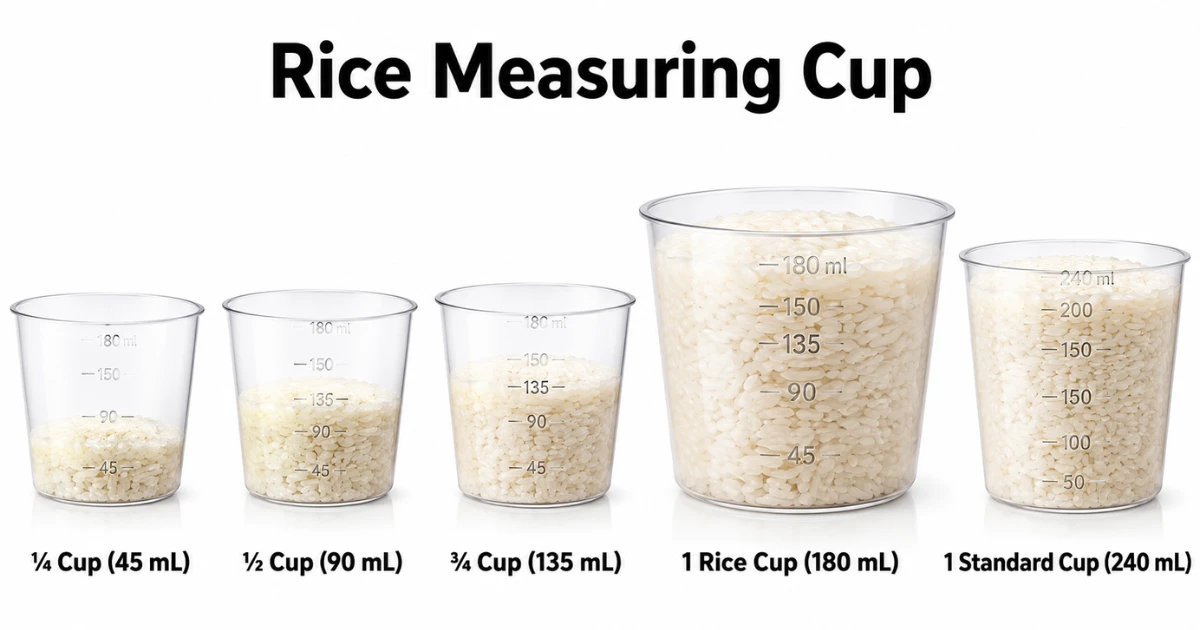
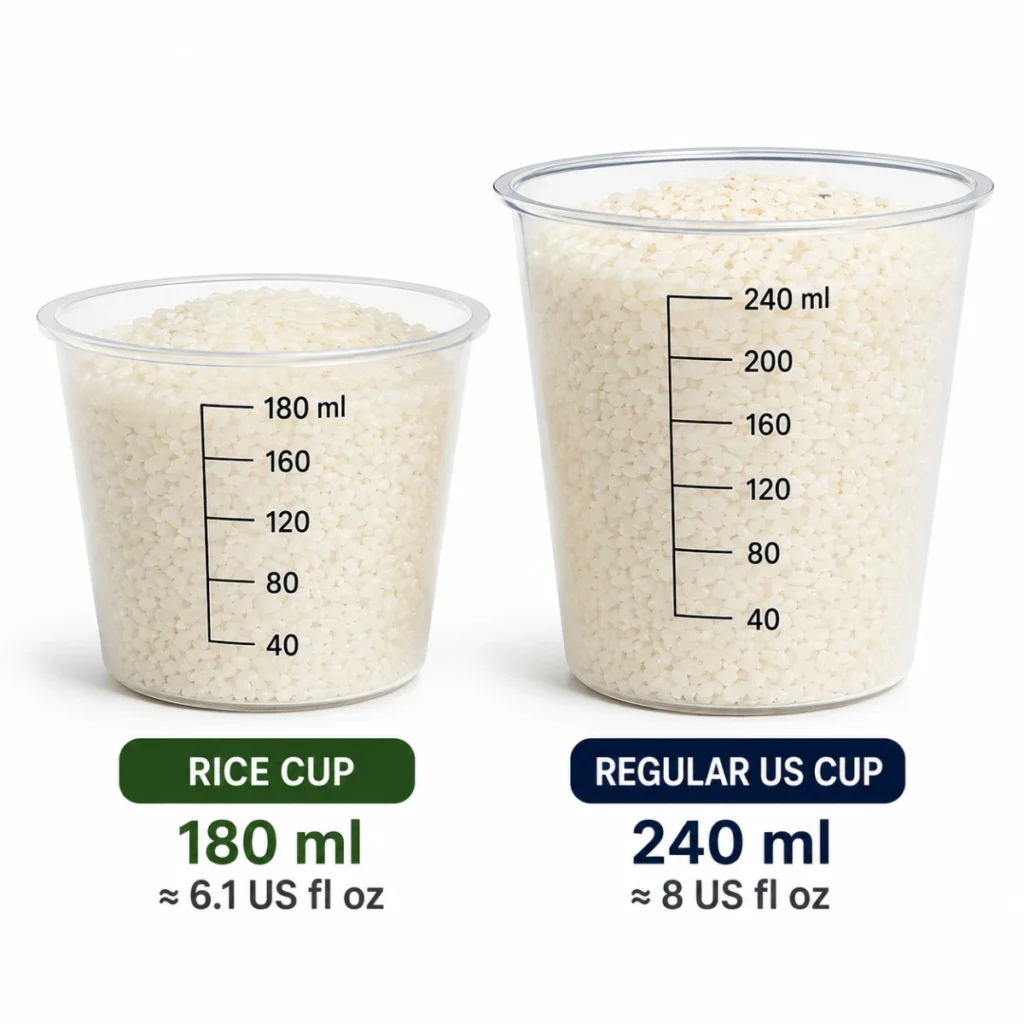
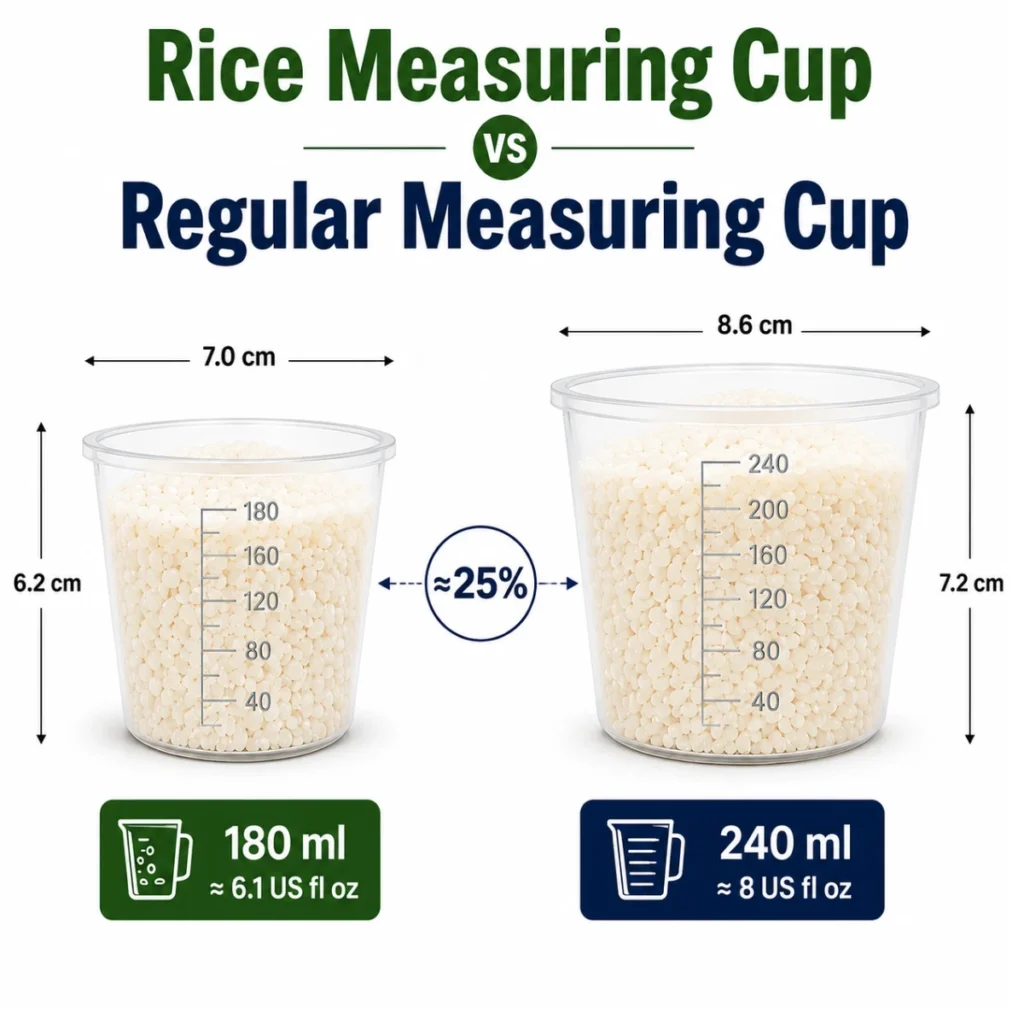
The standard rice measuring cup size is 180 ml, smaller than the everyday US measuring cup at 240 ml (8 fl oz). That’s roughly a 25% difference, and it’s the main reason people end up with too much or too little rice.
rice-measuring-cup-size
Rice cup: 180 ml ≈ 6.1 US fl oz
Regular US cup: 240 ml ≈ 8 US fl oz
Difference: about 25% smaller
Some cups show a lower number on the scale, like 160 ml, but you fill to the rim and level off to reach the true 180 ml mark.
Rice Measuring Cup vs Regular Measuring Cup
A rice cup and a regular measuring cup are not interchangeable, even though they look similar. The rice cup is built for rice cookers, so its cooking time and water settings are matched to that smaller 180 ml volume.
rice-measuring-cup-vs-regular-measuring-cup
Rice cup (180 ml): used for rice cookers, sold with the appliance
Regular cup (240 ml): used for baking and general cooking
Result of mixing them up: shifted rice-to-water ratio, leading to soggy or undercooked grains
If your recipe says “1 cup,” always check whether it means a rice cup or a standard cup.
Converting a rice cup to grams depends on the rice type, since grain shape and moisture change the weight. As a general guide, one 180 ml rice cup holds close to 150 grams of uncooked rice.
Short-grain white rice: about 150g per cup
Basmati or jasmine rice: about 130 to 140g per cup
Brown rice: slightly less per cup, since bran makes grains bulkier but lighter
Weight is never fixed across batches, so volume stays the more reliable method for rice cookers.
Rice to Water Ratio by Cup
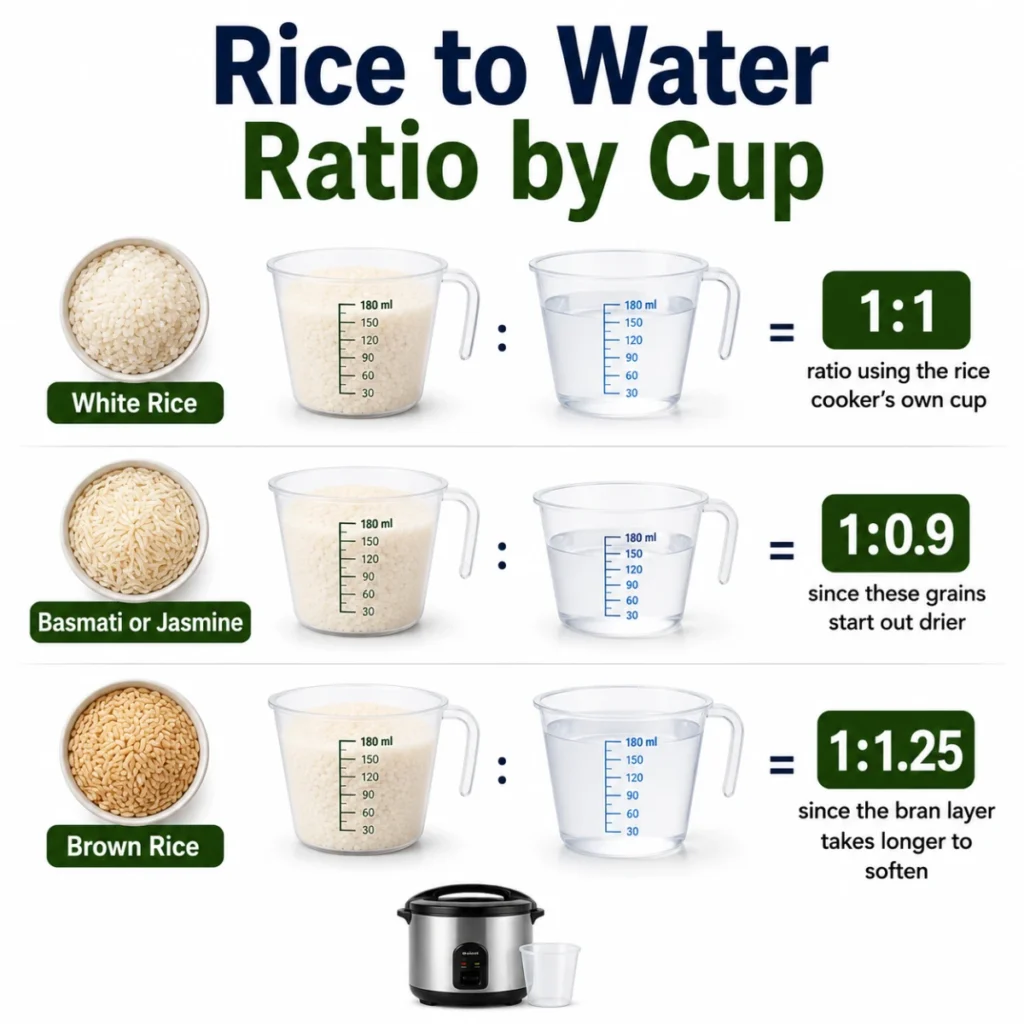
The safest rule is simple: use the same cup for both rice and water. Mixing cup types is the number one cause of gummy or crunchy rice.
rice-to-water-ratio-by-cup
White rice: 1:1 ratio using the rice cooker’s own cup
Basmati or jasmine: closer to 1:0.9, since these grains start out drier
Brown rice: closer to 1:1.25, since the bran layer takes longer to soften
How to Measure Rice Without a Cup
Lost your rice cooker’s cup? You’ve got backup options.
Kitchen scale: most accurate, since 150 grams of dry rice equals roughly one rice cup
Standard US measuring cup: works fine, but adjust water slightly upward since it’s bigger
Cupped-hand method: two handfuls per person, a rough estimate for single servings
Types of Rice Measuring Cups
Rice cups come in a few common materials and sizes.
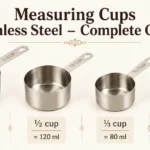
Stainless steel: durable, dishwasher-safe, often 120 ml, 250 ml, or 350 ml
Plastic: lightweight, the default cup shipped with most rice cookers, usually 160 ml or 180 ml
Bamboo: traditional look, popular for gifting or display, less common for daily precision cooking
Picking the right one depends on whether you value durability, accuracy, or style.
FAQ’s
How much is a rice measuring cup?
A standard rice measuring cup costs between $3 and $12, depending on material and brand.
Is 250g of rice 1 cup?
No, 250 grams is more than one rice cup, since a standard 180 ml rice cup holds around 150 grams.
Is 1 cup of rice equal to 1 cup of water?
Yes, for plain white rice, a 1:1 ratio using the same cup for both works best.
Is a rice measuring cup different?
Yes, it’s smaller than a regular US measuring cup, holding 180 ml instead of 240 ml.
Is 1 cup of rice 200g?
No, one standard rice cup is closer to 150 grams, not 200 grams.
Is 250g equal to 1 cup?
No, 250 grams equals about 1.5 to 1.7 rice cups, depending on the rice type.
Conclusion
Getting your rice measuring cup right removes the guesswork from every meal, from fluffy basmati to sticky short-grain rice. Once you know your cup size and ratio, perfect rice becomes second nature every time you cook.
I am the admin and author of Measur Cup, researching, verifying, and simplifying weight, length, and unit conversions to provide accurate, easy-to-understand measurement guides for everyday use.