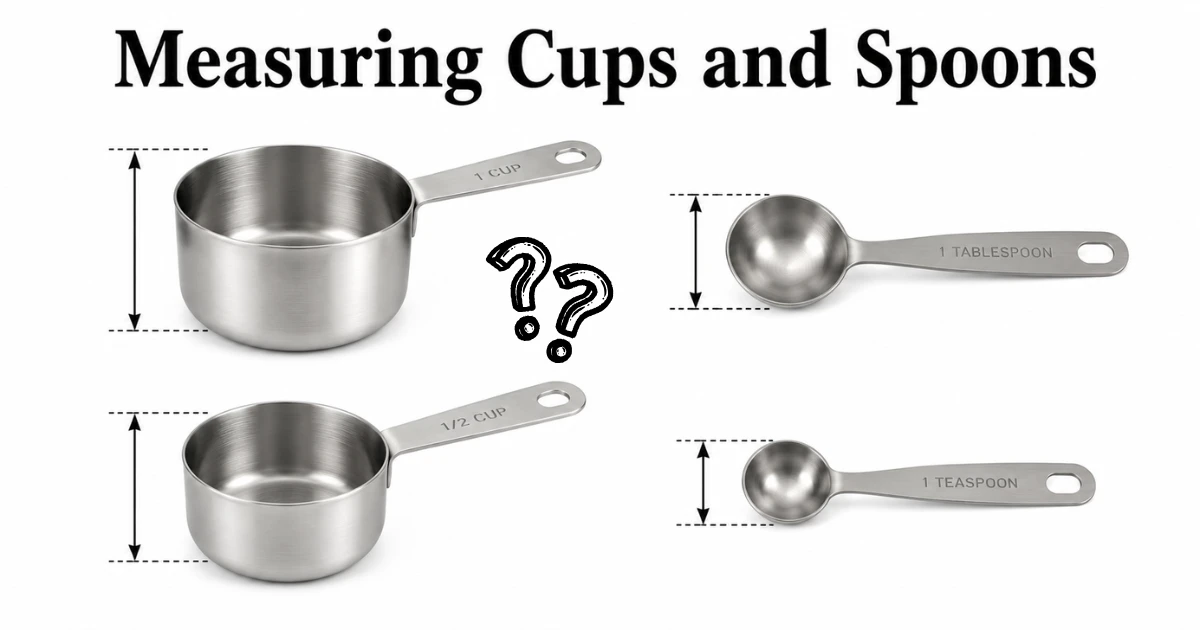
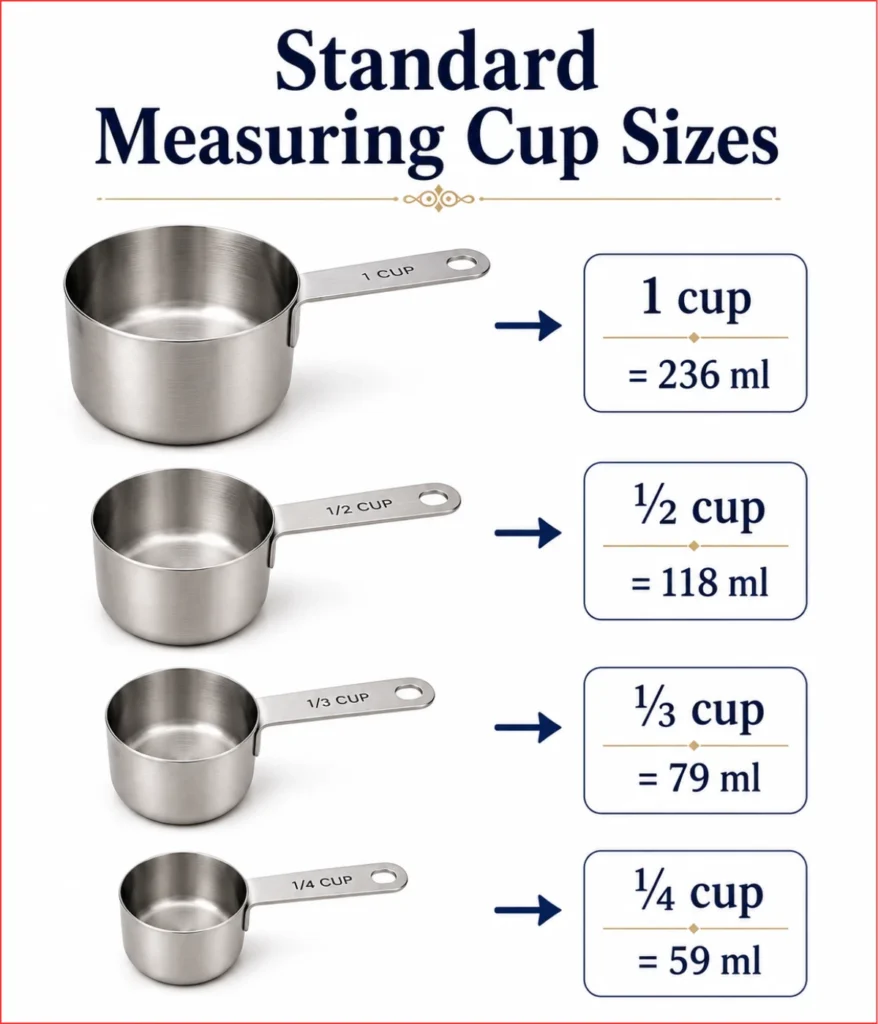
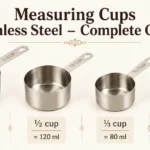
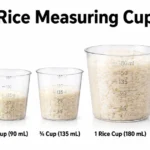
Measuring cups and spoons portion out exact amounts of dry and liquid ingredients, with a standard set covering 1 cup, 1/2 cup, 1/3 cup, and 1/4 cup. 1 cup equals 16 tablespoons, 1 tablespoon is 15 ml, and 1 teaspoon is 5 ml.
This guide lists standard measuring cup and spoon sizes, a conversion chart, and the difference between liquid and dry measuring cups. It also explains how to choose the right set.
What Are Measuring Cups and Spoons
Measuring cups and spoons are simple kitchen tools used to portion out exact amounts of ingredients. They take the guesswork out of cooking and baking, so your recipes turn out the same way every time.
Most sets include both cups and spoons in standard sizes, covering everything from a pinch of salt to a full cup of flour. They work for dry ingredients like sugar and flour, and liquid ingredients like oil and milk.
Measuring spoons handle the smaller amounts that cups can’t. They’re essential for spices, baking powder, and flavor extracts where precision really matters.
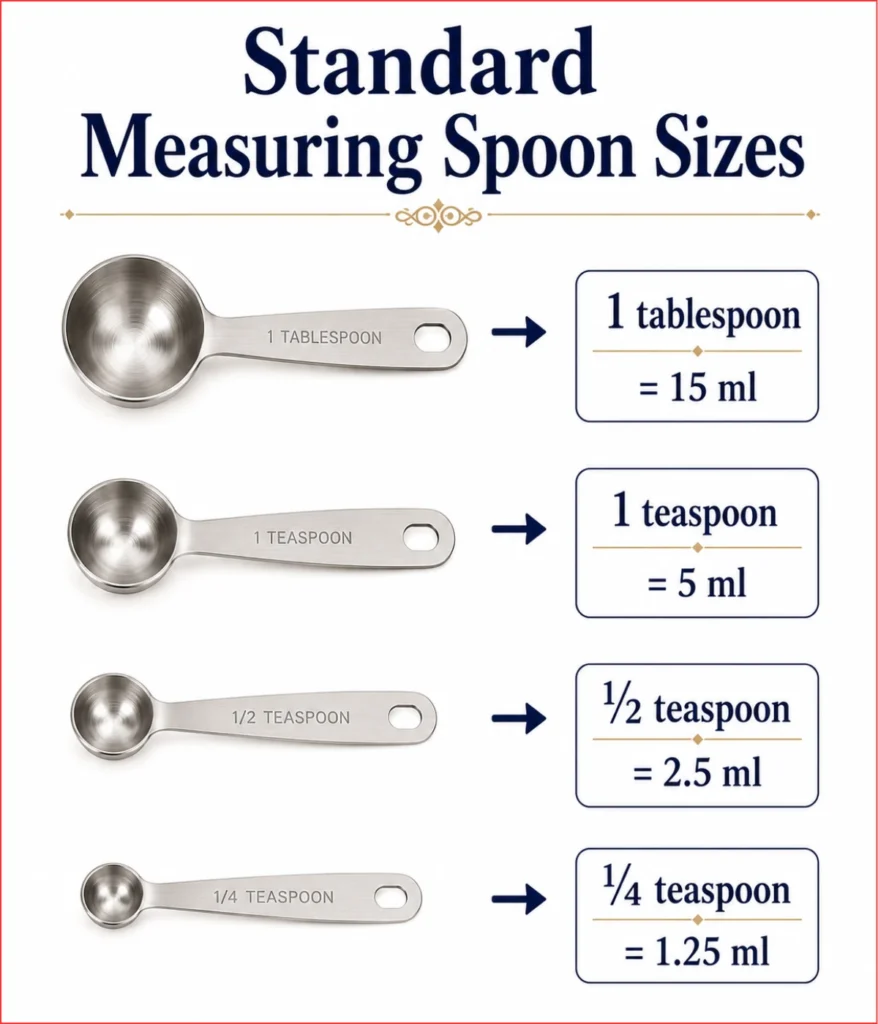
1 tablespoon = 15 ml
1 teaspoon = 5 ml
1/2 teaspoon = 2.5 ml
1/4 teaspoon = 1.25 ml
standard-measuring-spoon-sizes
Measuring Cups and Spoons Conversion Chart
Conversions are where most people get stuck. Here’s a quick reference so you never have to Google it mid-recipe again.
3 teaspoons = 1 tablespoon
2 tablespoons = 1/8 cup
4 tablespoons = 1/4 cup
16 tablespoons = 1 cup
1 cup = 8 fluid ounces
Liquid vs Dry Measuring Cups: What’s the Difference
Not all measuring cups are built the same. Liquid measuring cups usually have a spout and extra space at the top to prevent spilling. They’re designed to be read at eye level.
Dry measuring cups are meant to be filled to the exact top and leveled off with a flat edge. Using the wrong type can throw off your measurement by a noticeable margin, especially with ingredients like flour or sugar.
Picking a good set comes down to material, design, and durability.
Stainless steel sets last longer and resist stains, while plastic sets are lighter and often cheaper. Glass options, like the classic liquid measuring cup, are easy to read but can break if dropped.
Look for sets that nest or stack together for easy storage, and check that the size markings are clearly printed so they don’t fade over time.
Conclusion
Getting your measurements right starts with the right measuring cups and spoons and knowing how to use them. Keep this guide handy, and you’ll never second-guess a recipe again.
FAQ’s
How much is 1 cup in a spoon?
One cup equals 16 tablespoons.
Is a measuring cup a spoon?
No, a measuring cup and a measuring spoon are different tools with different volume ranges.
What are the 4 sizes of measuring cups?
The 4 standard sizes are 1 cup, 1/2 cup, 1/3 cup, and 1/4 cup.
I am the admin and author of Measur Cup, researching, verifying, and simplifying weight, length, and unit conversions to provide accurate, easy-to-understand measurement guides for everyday use.