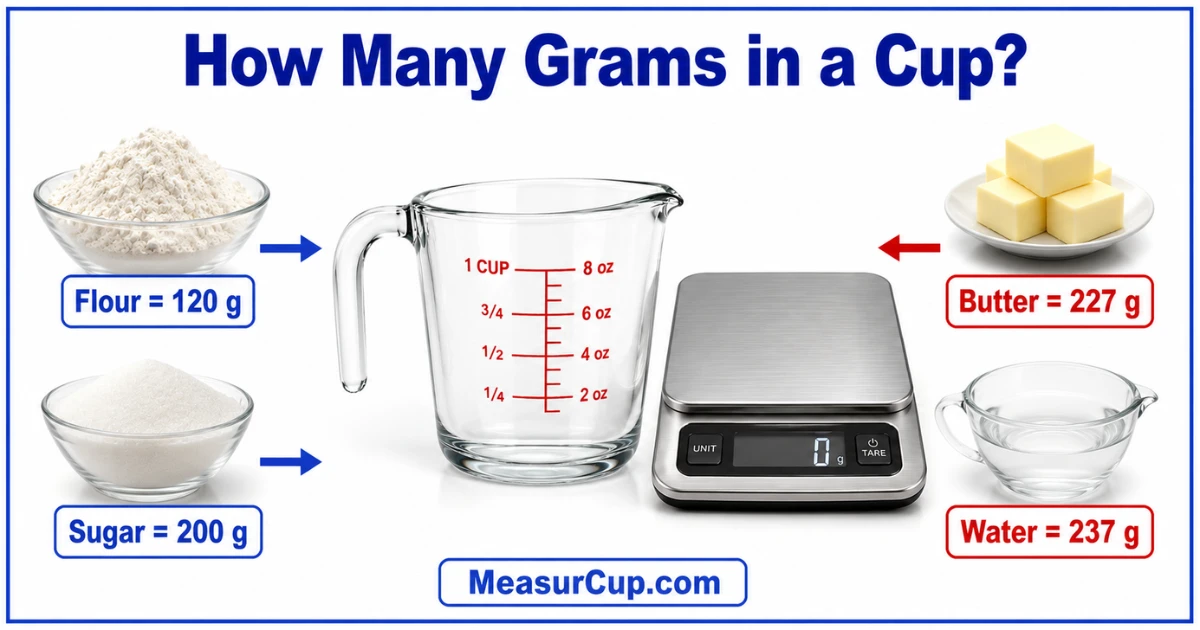
A US cup equals different gram weights depending on the ingredient: 1 cup of all-purpose flour is 120g, granulated sugar is 200g, butter is 227g, and water is 237g. Density changes the weight of every ingredient.
This blog covers a cup-to-gram conversion chart for 1 cup, 1/2 cup, and 1/3 cup of common ingredients. It also explains how to convert grams to cups, lists everyday items that equal 1 cup, and shares tips for accurate measuring.
How Many Grams in a Cup (Conversion Chart)
| Ingredient | 1 Cup | 1/2 Cup | 1/3 Cup |
|---|---|---|---|
| All-purpose flour | 120g | 60g | 40g |
| Granulated sugar | 200g | 100g | 67g |
| Brown sugar (packed) | 220g | 110g | 73g |
| Butter | 227g | 113g | 76g |
| Cocoa powder | 100g | 50g | 33g |
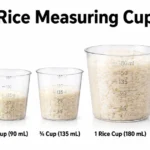
| Rice (uncooked) | 185g | 92g | 62g |
| Rolled oats | 90g | 45g | 30g |
| Milk | 245g | 122g | 82g |
| Water | 237g | 118g | 79g |
How Many Grams in 1/2 Cup
- All-purpose flour: 1/2 cup = 60g
- Granulated sugar: 1/2 cup = 100g
- Butter: 1/2 cup = 113g
- Water: 1/2 cup = 118g
- Brown sugar (packed): 1/2 cup = 110g
More Post: How Many Cups in a Quart? 1, 2, 3 & 4 Quarts (Kitchen Chart)
How Many Grams In 1/3 Cup
- All-purpose flour: 1/3 cup = 40g
- Granulated sugar: 1/3 cup = 67g
- Butter: 1/3 cup = 76g
- Water: 1/3 cup = 79g
- Cocoa powder: 1/3 cup = 33g
How to Convert Grams to Cups
Divide the gram weight by the ingredient’s grams-per-cup value.
For example:
- 100g of flour ÷ 120g (1 cup) = 0.83 cups
- 50g of sugar ÷ 200g (1 cup) = 0.25 cups (or 1/4 cup)
Common Things That Are 1 Cup
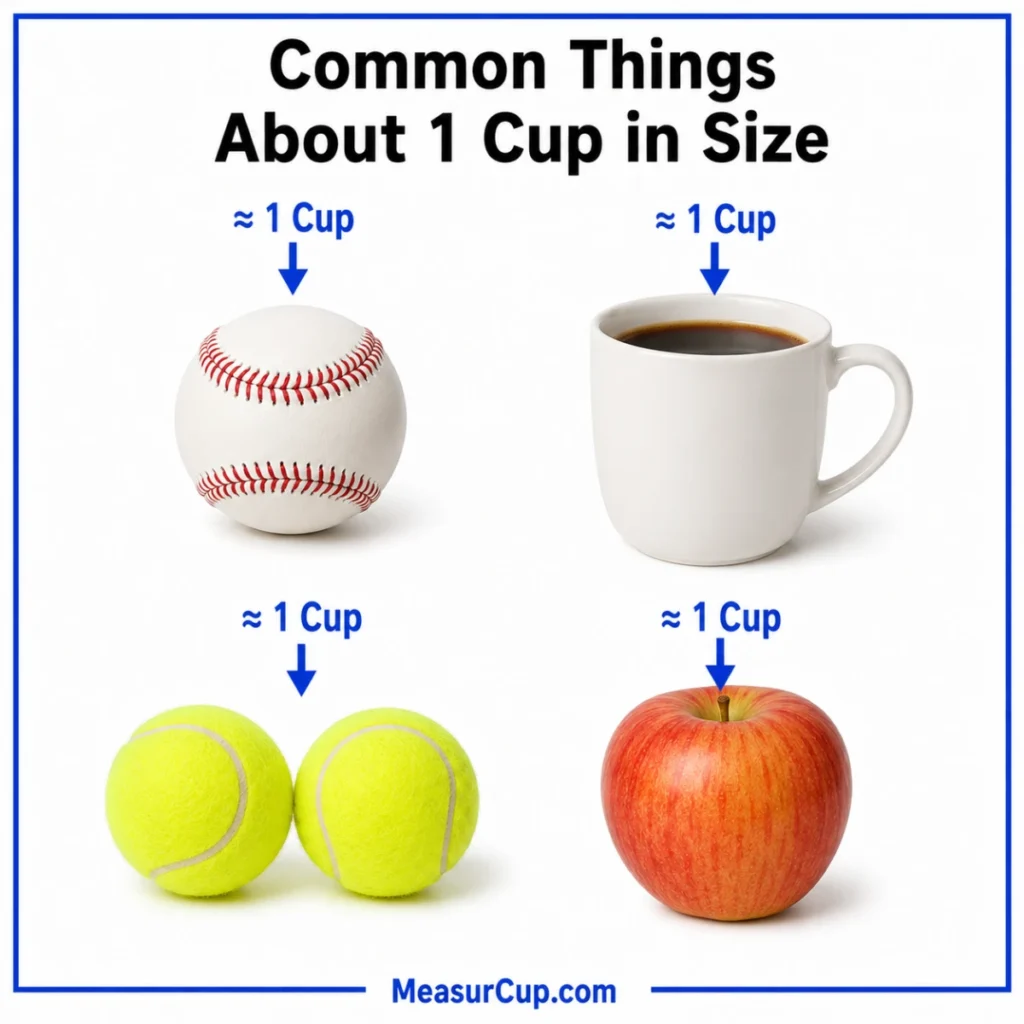
A Baseball
A standard baseball takes up almost exactly 1 cup of space. It’s a go-to visual reference bakers use when estimating portion sizes without a measuring cup nearby.
A Standard Coffee Mug
Most US coffee mugs hold close to 1 cup when filled to about three-quarters full. This makes a mug a handy backup for quick, informal measuring.
A Tennis Ball
A tennis ball is smaller than a full cup by volume, but stacking two gives a rough visual for portioning ingredients like rice or pasta.
A Large Apple
A large apple roughly matches 1 cup in size. This comparison is often used in nutrition guides to help people picture fruit and vegetable serving sizes.
More Post: How Many Teaspoons in a Cup? (1/8 to 1 Cup Chart)
Tips for Accurate Cup to Gram Measuring
Small habits make a big difference in measurement accuracy:
- Use a digital kitchen scale for dry ingredients whenever possible
- Spoon flour into the cup instead of scooping directly from the bag
- Level off the top with a flat edge rather than a rounded scoop
- Pack brown sugar firmly unless a recipe says otherwise
- Weigh liquid ingredients at eye level for the most accurate reading
Conclusion
Grams per cup shift depending on the ingredient, so one universal number doesn’t exist. Keep the chart above handy, and a kitchen scale will always give the most reliable result.

I am the admin and author of Measur Cup, researching, verifying, and simplifying weight, length, and unit conversions to provide accurate, easy-to-understand measurement guides for everyday use.